 08045478471
 Send Inquiry
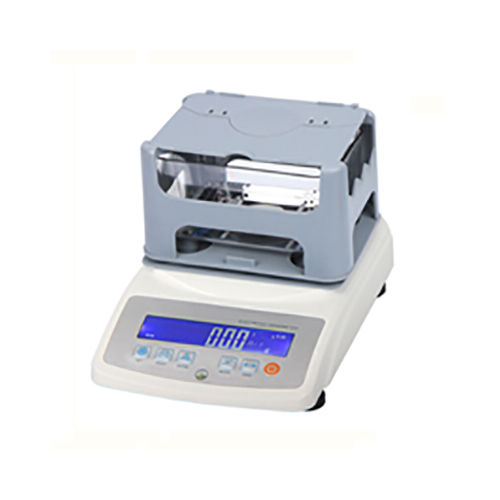
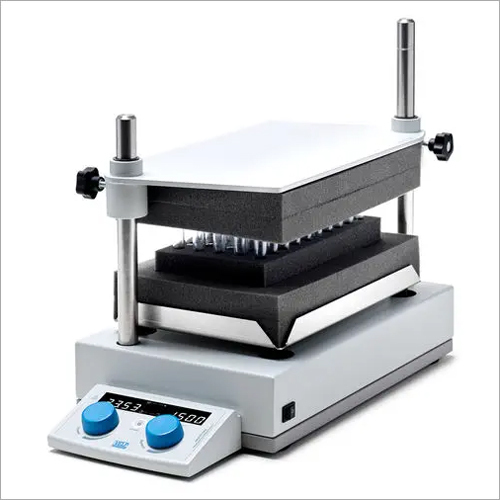
Density Meter
Product Details:
- Automation Grade Automatic
- Phase Single Phase
- Power 15 W
- Properties High Precision, Corrosion Resistant
- Shape Rectangular
- Suitable For Chemicals, Pharmaceuticals, Research Laboratory
- Material Mild Steel & Stainless Steel
- Click to view more
X
Density Meter Price And Quantity
- 1 Piece
- RS232 Data Output
- Indoor
- 0.001 g/cm³
- 1-120 ml
- Automatic & Manual
Density Meter Product Specifications
- Electric
- High Precision, Corrosion Resistant
- Mild Steel & Stainless Steel
- Rectangular
- Chemicals, Pharmaceuticals, Research Laboratory
- Automatic
- Single Phase
- 15 W
- Automatic Calculation
- 10C ~ 40C
- 10% ~ 80% RH
- 5.5 kg
- Digital
- Standard
- White
- 50 Hz
- Density Measurement of Liquids and Solids
- 220 V
- Store Upto 99 Records
- Laboratory & Industrial
- 300 mm
- LED Digital
- Density Meter
- 250 x 150 x 300 mm
- 0.001 g/cm
- RS232 Data Output
- Indoor
- 0.001 g/cm³
- 1-120 ml
- Automatic & Manual
Density Meter Trade Information
- 25 Piece Per Month
- 2-4 Week
- All India
Product Description
Density Meter is a scientific instrument used for measuring the density of a liquid or solid sample. It is used to determine the mass per unit volume of the material, in order to provide valuable information about its physical properties and composition. This meter operates on the principle of buoyancy, where the sample is immersed in a reference liquid of density that is known. The Density Meter measures the displacement of the reference liquid caused by the sample and calculates the density on the basis of this measurement. This meter finds application in numerous industries, such as petroleum, pharmaceuticals, food processing and chemicals, where accurate density measurements are essential for process optimization, quality control, and product formulation.
Warranty - 1 Years
Feature - High Quality & Durable
Reliable Performance in Varied Environments
Designed for indoor use, the density meter delivers consistent results across a broad humidity (10% ~ 80% RH) and temperature range (10C ~ 40C). Its robust construction is resistant to corrosion, making it well-suited for both laboratory research and industrial routines.
User-Friendly and Versatile Operation
With automatic and manual calibration options, users can swiftly prepare the device for different measurement scenarios. The LED digital display provides clear readouts, while the RS232 interface supports straightforward data exports for advanced analysis and record-keeping.
FAQs of Density Meter:
Q: How can I calibrate the density meter for accurate measurements?
A: The instrument allows both automatic and manual calibration, ensuring precision for varying sample types. Follow the onscreen prompts for automatic calibration, or refer to the manual for step-by-step guidance using calibration standards.Q: What types of samples can be measured using this density meter?
A: You can use the meter to determine the density of liquids and solids. Its wide sample volume range (1120 ml) makes it suitable for chemicals, pharmaceuticals, and research materials in laboratory or industrial settings.Q: When should I use manual calibration instead of automatic calibration?
A: Manual calibration is recommended for special cases or when sample characteristics require customized calibration settings not covered by the automatic routine. This can optimize accuracy for unique or challenging samples.Q: Where can the density meter be installed for optimal performance?
A: Install the device indoors in environments with controlled humidity (10% ~ 80% RH) and temperatures (10C ~ 40C). Its compact dimensions (250 x 150 x 300 mm) and corrosion-resistant construction suit most laboratory benches or industrial workstations.Q: What is the benefit of the RS232 data output interface?
A: The RS232 interface facilitates direct data transfer to computers or data loggers, allowing efficient storage, analysis, and sharing of density records without manual transcription.Q: How is data storage handled on the device?
A: This density meter can store up to 99 measurement records internally, enabling users to review and manage data conveniently between transfers and analyses.Q: What advantage does high precision and corrosion resistance provide?
A: High precision (0.001 g/cm) ensures reliable, reproducible measurements essential in research and quality control. Corrosion resistance extends the instruments lifespan even in challenging chemical environments.Tell us about your requirement

Price:
Quantity
Select Unit
- 50
- 100
- 200
- 250
- 500
- 1000+
Additional detail
Mobile number
Email

Other Products in 'Medical Instruments' category

CP SCIENTIFIC
GST : 33AJFPC8435M1Z4
GST : 33AJFPC8435M1Z4

- B N0.715 , 9th Street, S A Colony 1st Cross, Sharma Nagar, Vyasarpadi, Chennai - 600039, Tamil Nadu, India
- Phone : 08045478471

- Mr Chandra Sekar.G (Propriter)
- Mobile : 08045478471
- cpscientific4684@gmail.com
 Send Inquiry
 Send SMS
CP SCIENTIFIC
All Rights Reserved.(Terms of Use)
Developed and Managed by Infocom Network Private Limited.
Developed and Managed by Infocom Network Private Limited.

